Our Mission

Fluency is the foundation
of everything.

"Every student who struggles with algebra struggled first with arithmetic. The fix isn't remediation — it's fluency, built early and built well."

The Classical Education Foundation exists because foundational skills matter more than any curriculum trend. Reading fluency, writing mechanics, arithmetic fact mastery, and musical training are not optional enrichments — they are the irreplaceable tools a child needs to think clearly, reason precisely, and engage with the world.

We build free, competitive digital tools that make mastery practice engaging for students. We develop curriculum frameworks grounded in research. And we bring professional development to educators who want to do more than cover standards — educators who want their students to own their foundational skills.

Our work begins with arithmetic. The same competitive, mastery-focused philosophy will extend to reading and music.

The Classical Education Foundation is organized as a nonprofit organization. 501(c)(3) status is pending — ensuring that our commitment to free, accessible tools for every student is not a business model, but a mission.

Programs & Tools

Free for every student.
Built for every classroom.

Our flagship work is Classic Math Games — a suite of free, competitive arithmetic fluency games for grades 1–5. One account. All four operations. No paywall, ever. Because it runs in any web browser and is fully available in Spanish — with speech recognition that listens for Spanish-language responses — it reaches students who have historically been locked out of ed-tech by paywalls, download requirements, language barriers, and device limitations. That’s not a feature. It’s the mission.

What Times What Live Now

Grades 3 · 4 · 5  ·  Multiplication

The flagship. Students speak their answers aloud as AI scores every response. Daily challenges, global leaderboards, classroom tools, a 7-tier rating system, and friend challenges. Often described as the spelling bee for math. Available in English and Spanish, with no download or app store account required. Works on any browser — including the Chromebooks most common in under-resourced classrooms.

Play free at whattimeswhat.com →

What Plus What Coming Soon

Grades 1 · 2  ·  Addition

Addition facts to 20, built for the youngest competitive learners. The hint system uses concrete objects — apples, stars, flowers — grounding every strategy in something a 1st grader can see and count. Same competitive format as What Times What.

Learn more at classicmathgames.com →

What Minus What Coming Soon

Grades 2 · 3  ·  Subtraction

Subtraction facts as the inverse of addition — reinforcing number sense while building a new dimension of fluency. Designed to follow naturally from What Plus What in a teacher's toolkit.

classicmathgames.com →

What Divided By What Coming Soon

Grades 4 · 5  ·  Division

The natural companion to What Times What. Division fluency completing the four-operation suite, giving students full arithmetic mastery before middle school mathematics.

classicmathgames.com →

Designed for every student — especially those ed-tech typically forgets.

Classic Math Games was built with three access commitments that are rare in educational technology:

  • No download, no app store. It runs in any web browser — Chrome, Safari, Edge, Firefox — on any device. A student on a shared family phone or a decade-old school Chromebook can play without installing anything.
  • Fully bilingual in English and Spanish. The interface, classroom tools, and speech recognition all support Spanish. A student can speak their answer in Spanish and the app scores it correctly. Language is not a barrier.
  • Free forever — not a freemium model. There is no premium tier, no trial clock, no district purchasing cycle. Teachers in under-resourced schools access the same full feature set as every other teacher. The Classical Education Foundation funds development through professional development, grants, and sponsorships — never through student-facing fees or advertising.

Our Pedagogy

Built on the CRA progression.

Every Classic Math Games product is designed around the Concrete–Representational–Abstract framework — the research-backed instructional model used in Singapore Math, Illustrative Mathematics, and Math Recovery. The hint system in each app is deliberately calibrated to the right cognitive stage for its audience.

Concrete

Students manipulate or visualize real objects. Counting apples, stars, and flowers. Touching and moving things they can see.

→ What Plus What (Grades 1–2)

Representational

Students work with diagrams and models — dot arrays, number lines — that stand in for physical objects without being the abstract symbols yet.

→ What Times What (Grades 3–5)

Abstract

Students work fluently with pure symbols: 7 × 8 = 56. The goal of the whole suite — automatic, confident, pressure-tested recall.

→ Every game card, every mode

About the Founder

Educator. Director.
Builder.

Classical Education Foundation

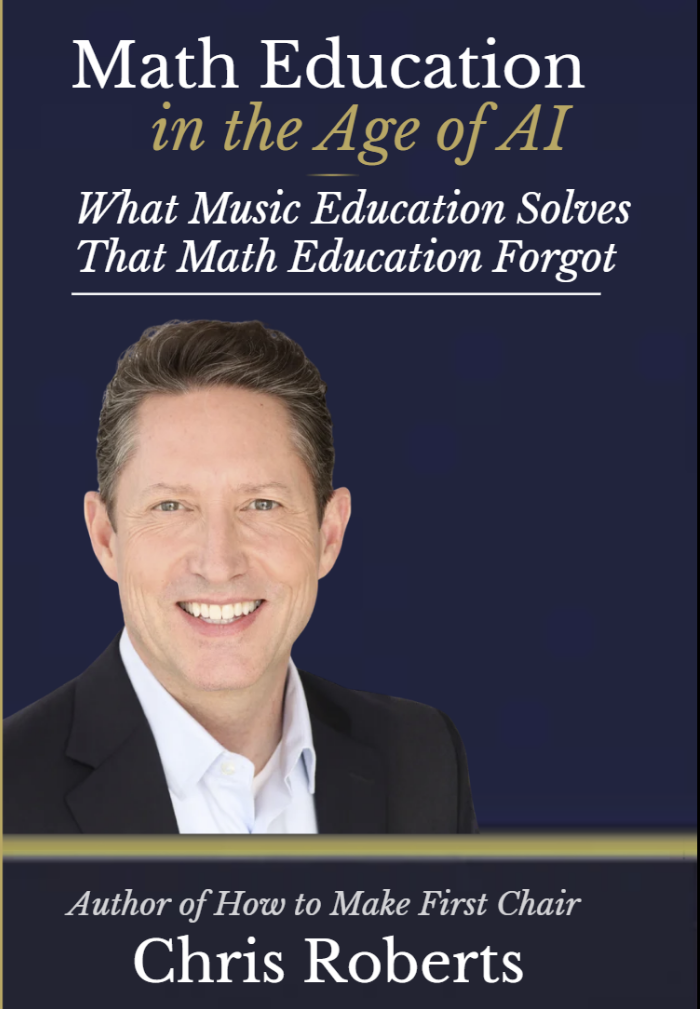
Chris Roberts

M.S. Education (Mathematics)  ·  B.S. Music Education

Chris Roberts has spent his career at the intersection of rigorous discipline and student success. As an award-winning high school and middle school band director in Texas, he guided every performing group under his direction to superior ratings. As a college mathematics instructor in both Texas and Arkansas, he watched firsthand as students who lacked foundational arithmetic fluency struggled not from inability — but from a gap that should have been closed years earlier.

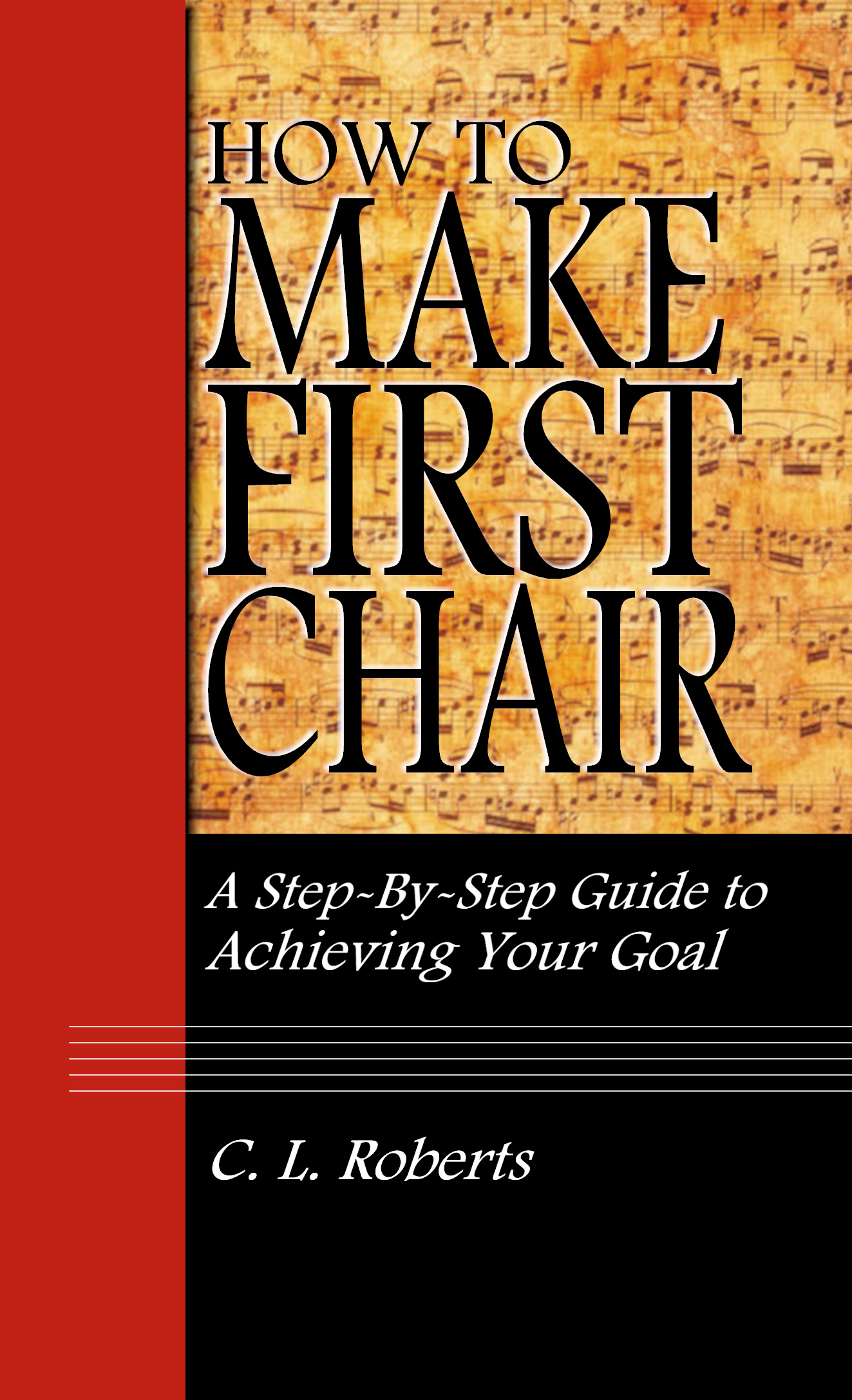
That observation became the foundation for Classic Math Games: free, competitive tools that treat arithmetic fluency with the same rigor a band director brings to daily scales. His book, How to Make First Chair (3rd Ed., 2021), applies the same philosophy to musical audition preparation — disciplined, systematic, measurable practice over time.

The Classical Education Foundation is the umbrella for this work: connecting the arithmetic tools, the music education philosophy, and the professional development experience into a coherent mission.

M.S. Education — Mathematics B.S. Music Education — Henderson State High School Band Director — Texas College Math Instructor — TX & AR Author — How to Make First Chair Software Developer

Professional Development

Bring mastery-based
fluency practice to your school.

Workshops & Presentations

Chris Roberts brings the research, the tools, and the classroom experience to professional development sessions for K–5 math teachers, curriculum coordinators, and district leaders. Sessions are grounded in practice — not theory — and participants leave with free, ready-to-deploy tools for their classrooms.

As a nonprofit organization (501(c)(3) status pending), the Classical Education Foundation is able to work with schools and districts outside the typical vendor procurement process. If your district requires nonprofit documentation, contact us directly.

  • Math fact fluency: why it matters and how to build it
  • The Concrete–Representational–Abstract (CRA) progression in practice
  • Using competitive formats to increase practice intensity
  • Classic Math Games: classroom setup, leaderboards, and live competitions
  • Diagnosing fluency gaps with the teacher dashboard
  • Connecting arithmetic fluency to algebraic readiness
  • Parallels between music mastery and math mastery
Request a Session

contact@classical-education.org

Common Questions

Frequently asked.

The Classical Education Foundation advances mastery-based learning in the four foundational disciplines — reading, writing, arithmetic, and music — for K–12 students. Our work includes free digital tools (Classic Math Games), professional development for educators, and curriculum research grounded in the Concrete–Representational–Abstract framework.
Yes — completely free. No paywall, no subscription, no ads shown to students, and no in-app purchases. Teacher features including classroom management, student progress tracking, and live competitions are also free. Free forever is not a temporary offer; it's the model.
Yes. What Times What is fully available in Spanish. The interface, game instructions, classroom tools, and speech recognition all support Spanish. Students can speak their multiplication answers in Spanish and the app scores them in real time. Language is not a barrier to participation — for students or families.
No. The games run in any web browser — no download, no app store, no Google account, no credit card required. Students join classrooms with a 6-character code. The only requirement is a browser-capable device, which includes the Chromebooks common in most public schools.
What Times What (whattimeswhat.com) is a free, competitive multiplication fluency app for grades 3–5. Students speak their answers aloud — AI-powered speech recognition scores every response in real time. The game covers all 78 non-commutative pairs from the 12×12 multiplication table in 30 seconds. It includes a Daily Challenge (the same puzzle worldwide each day), global and classroom leaderboards, a 7-tier Elo-style rating system, and practice mode with interactive pedagogical hints. It is often described as the spelling bee for math.
CRA — Concrete, Representational, Abstract — is the research-backed instructional sequence used in Singapore Math, Illustrative Mathematics, and Math Recovery. Students first work with physical or visual objects (concrete), then with diagrams and models (representational), and finally with pure symbols and equations (abstract). Classic Math Games embodies this across the suite: What Plus What uses concrete objects like apples and stars in its hints for 1st–2nd graders, while What Times What uses abstract dot arrays for 3rd–5th graders. The progression is intentional and pedagogically grounded.
Email contact@classical-education.org with your school or district name, approximate number of teachers, and preferred timeframe. Sessions are available in person (Texas and surrounding region) and virtually for any location. We'll respond within 48 hours.
Yes. All Classic Math Games are fully COPPA-compliant. Students under 13 never need to provide an email address. Public leaderboards use auto-generated usernames — real names never appear without explicit opt-in. Students join classrooms with a 6-character code, and younger students get a Recovery Code instead of a password. No student data is sold or used for advertising.

Let's work together.

Whether you're a teacher setting up a classroom, a district leader exploring professional development, or a fellow educator who cares about foundational skills — we'd like to hear from you.

contact@classical-education.org